Klik her for at læse denne artikel på dansk
Competition: The strongest company wins the battle – to the benefit of the company itself, its customers and yes, the entire surrounding society. Because it’s the winners we need, right?
Well, says Graham Boyd, my conversation partner in our series on impact and money and author of the book “The Ergodic Investor and Entrepreneur”.
Because the view of competition I outlined at the beginning of the article is both old-fashioned, one-dimensional and ineffective – especially if the goal is to create impact, argues Graham Boyd.
To drive improvement we need competition, but at the same time we need cooperation. And actually much more cooperation than we have today.
“Adam Kahane, who facilitated some of the collaborative processes that moved South Africa out of apartheid, has written a book called ‘Collaborating With the Enemy.’ And that is exactly what we as humanity need to do,” says Graham Boyd.
Series: New world, new economy
We need a showdown with the usual way of thinking of economics, and give much more space to nature, if we want to avoid exceeding the planetary boundaries.
That is the message from Graham Boyd, author of the book “The Ergodic Investor and Entrepreneur”. He professes ergodicity economics, a central pillar of an economy capable of delivering net positive impact, regeneration, and everything else needed for all life, including ourselves, to flourish.
In a series of conversations with Graham Boyd, we explore whether a more nature-based approach to economics is what is needed to create companies that have a more positive impact on the world.
You can contribute to the series with questions, criticism and ideas. Send them to carsten@impactinsider.
In the business world, it is common to regard competition as the natural state and cooperation as something forced or created by higher values, Graham Boyd states. In nature, on the other hand, competition and cooperation coexist. Side by side as two independent dimensions. Not because higher value or ethics lead us to cooperate “against our nature”, but rather because the blend derisks and increases overall success probabilities for each individual.
“In nature, you see high competition and high cooperation at the same time,” says Graham Boyd.
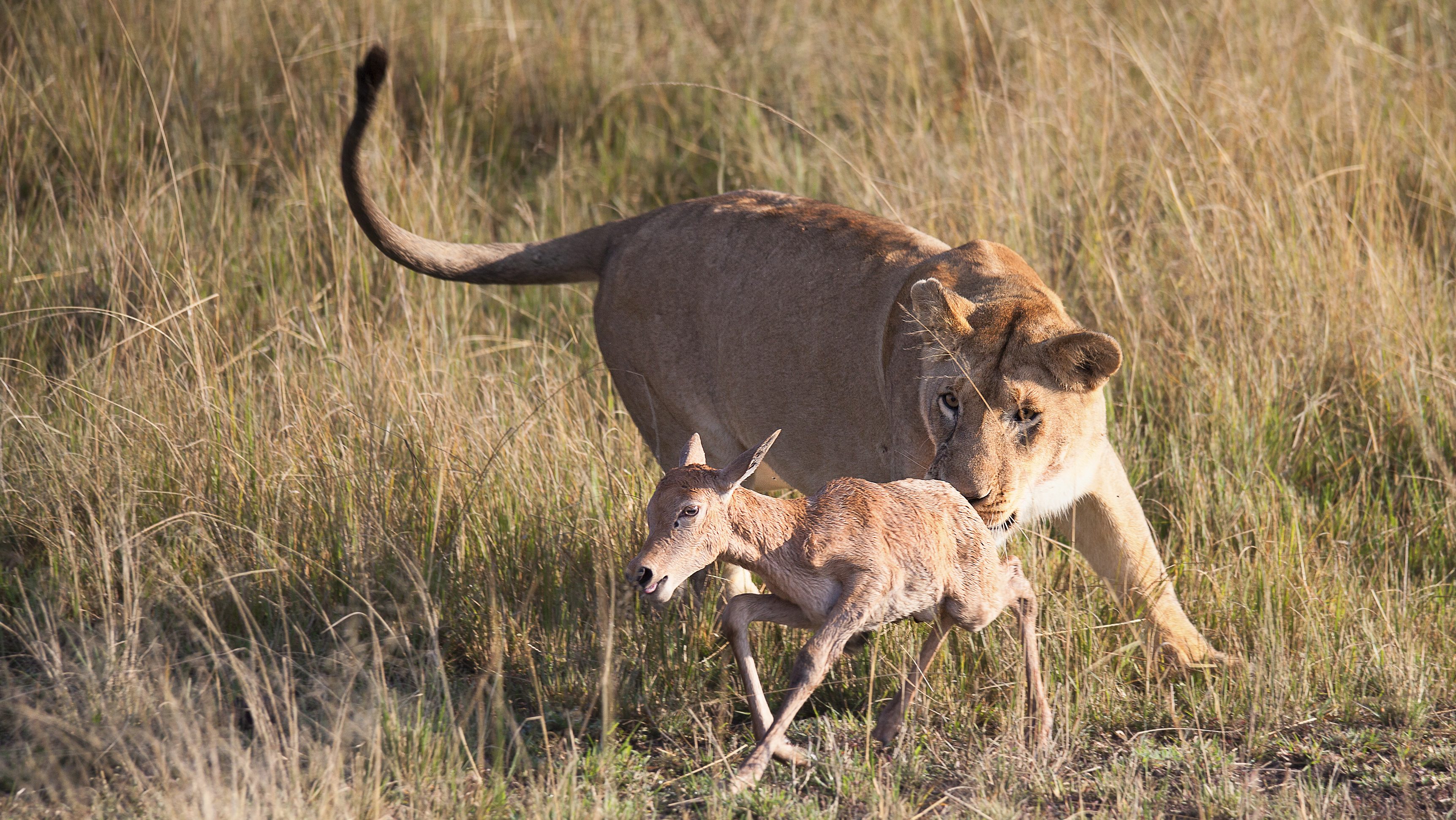
The battle between the lion and the antelope
On the South African savanna, there is a fierce competition between lions and antelopes, he emphasizes. If the lioness wins, the antelope must die. But if the antelope is light on its feet, the lioness must return home empty-handed to the herd.
This is classic life and death competition. Simultaneously in nature’s ecosystem, a competition between the antelope and the grass takes place at the same time. Here the antelope wins. And parallel to that, a collaboration takes place where a dung beetle processes the excrement of the lion and the antelope for the benefit of the grass.
“In nature, we see a very complex mixture of cooperation and competition that ensures that the entire ecosystem thrives. Without the optimization that takes place on many levels simultaneously, driven by both cooperation and collaboration, all life forms on this quite hostile planet would die out. I think this is what we need in impact business and impact investing, especially to make it mainstream” says Graham Boyd.
You can see the entire conversation in the video here in the article. And please, contribute curious and challenging questions for me to ask Graham Boyd in future episodes of our series. You can write to me at carsten@impactinsider.dk