By Sam Gilbert
Denmark, said Barack Obama, is a small country that punches above its weight.
It is home to fewer than 6 million people – but also to Europe’s largest company, Novo Nordisk. With particular strengths in biotechnology and renewable energy, its GDP per capita is higher than the United Kingdom, Germany or Japan, and rivals the United States.
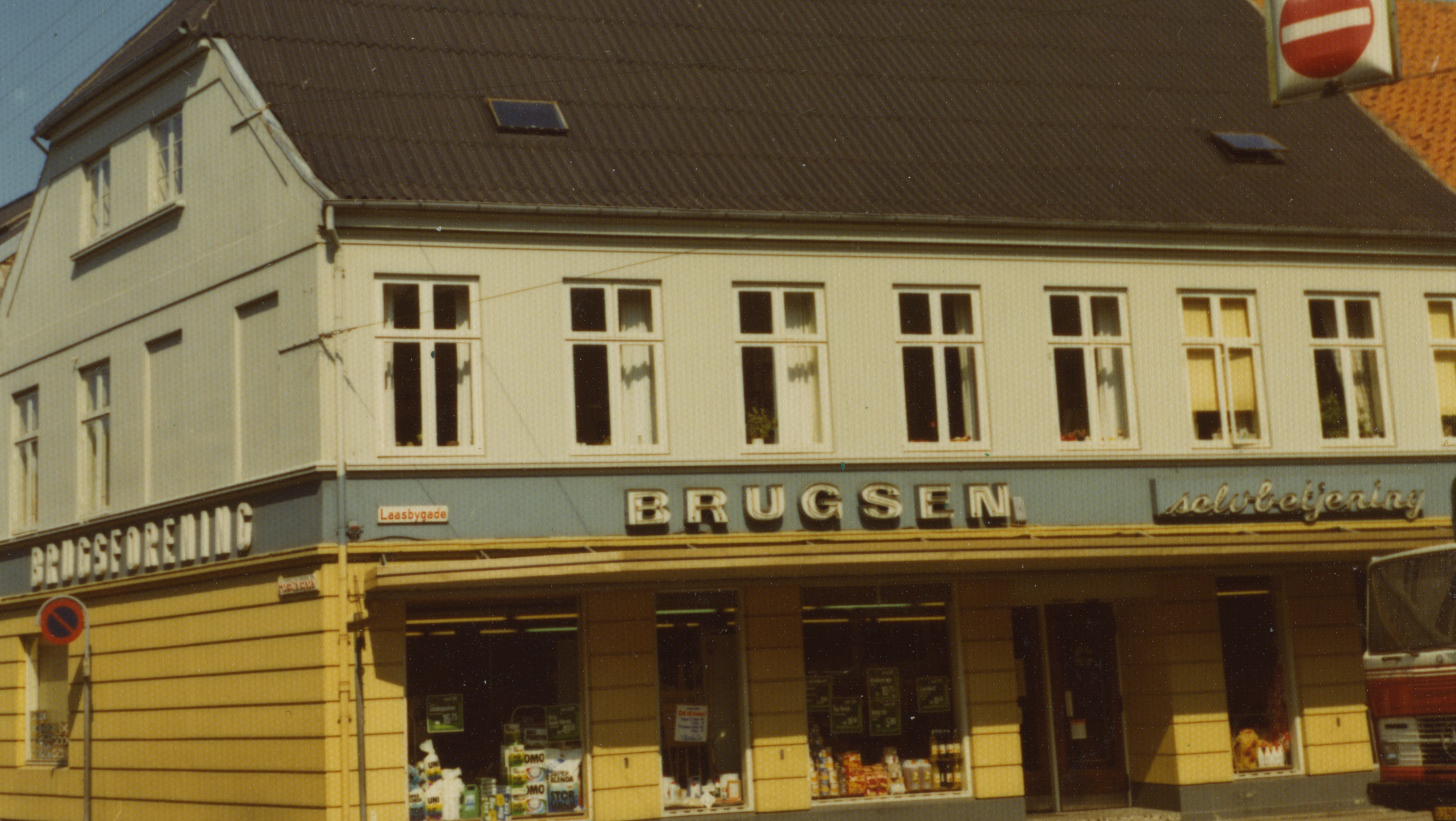
150 years ago, this would have been unimaginable. Denmark had an agricultural economy and had lost a third of its territory at war with Prussia. Small farmers struggled to eke out a living from the poor-quality land that remained, let alone invest in new machinery and methods to improve productivity. But from these unpromising conditions came the organizational innovation that sowed the seeds of the prosperity Denmark enjoys today: the co-operative movement.
Dairy and pig farmers pooled their resources so they could collectively buy machinery. They shared best practices, supporting and learning from one another. The result was not only higher output but also signicant quality improvements, enabling Denmark to become a major exporter of butter and bacon.
Later, consumer associations leveraged the collective buying power of members to negotiate better prices with suppliers. Democratically governed on a one-member-one-vote basis, the co-operatives embraced Grundtvig’s ideals of equality, culture, and education. They were the tool Denmark used to continuously improve itself.
Over time, agriculture has become a less important part of the Danish economy, consumerism has made society more individualistic, and co-operative membership has declined. Aside from their legal structure, many of today’s co-operatives are indistinguishable from commercial loyalty card programmes.
The co-operative movement is in need of renewal. In the UK, recognition of this need inspired the economist Robin Murray to write the manifesto Co-operation in the Age of Google, proposing “platform co-operatives” as a democratically-controlled alternative to big tech companies.
Here in Denmark, we believe renewal of the movement will come from a source that might seem as unpromising as the thin soil of West Jutland, but has the potential to yield the next 150 years of growth and prosperity: the personal data of ordinary Danes.
Data Protection is Not Enough
We have grown accustomed to thinking about personal data in terms of risk.
Shoshana Zuboff’s book The Age of Surveillance Capitalism, the Cambridge Analytica scandal, and reports of heavy fines for GDPR violations have all contributed to a perception that our policy priority with respect to data should be protecting citizens from exploitation by big tech companies.
An unintended consequence of this view has been a chilling effect on public-interest data science. Fearing reputational damage as well as fines under GDPR, municipalities avoid projects involving personal data. Despite clear benefits to the public, data sharing across the healthcare and other sectors is held back by a lack of trust. The result is that opportunities for data to make life better for Danes are being undervalued or even forgotten.
Looking overseas, we can see what these opportunities look like. Allowing Harvard economists to access 50 years of deidentied US tax record data led to granular insights into the drivers of economic inequality and the effectiveness of policy interventions. During the COVID-19 pandemic, models incorporating UK citizens’ Google searches and mobile location data signicantly improved on conventional epidemiological methods, allowing the spread of the disease to be predicted 17 days faster.
At the same time, the evolution of digital technology should prompt us to rethink our assumptions about big tech companies’ data agenda.
Developers of generative AI models are not interested in using personal data to micro-target advertising or inuence individuals’ online behaviour. Instead, their goal is to ingest as much data as possible, regardless of who produced it. Zuboff’s theory of “Surveillance Capitalism” no longer works as an explanation for big tech companies’ practices, meaning data protection laws no longer offer a complete solution for upholding citizens’ interests.
Why a National Data Co-Operative?
A number of analysis supports that a majority of the Danish citizens, hold these truths to be self-evident:
- ● Our data should create value for ourselves and for others
- ● Our data must be within our control and be used in accordance with our wishes
- ● We expect collaboration between public authorities, companies, researchers, and institutions to maximize the value created from our data
But we also find it dicult to get an overview over our data and to activate them in the way we wish them to be. A co-operative is the tool to make it safe and easy for citizens to share their data, and to create the incentives for organizations to work with personal data in a way that benefits citizens.
Pooling Danes’ data in a National data Co-operative can benefit Danish society and the economy in several ways.
Firstly, it would signicantly increase the scope for data analytics to be applied to the great public challenges of our time, including managing chronic disease and the green transition.
Secondly, it would spur the development of innovative services by the market. Open data and open banking demonstrate the benefits to consumers and the economy of making data that is traditionally controlled by incumbents accessible to new entrants.
Thirdly, it would create immediate economic benefits through commercial negotiation with AI companies on Danes’ behalf. Large language models, machine learning algorithms and other AI technologies rely on vast quantities of text, audio, image and video data.
While publishers and music labels are striking licence agreements with AI companies for use of their archives and back catalogues, currently no one represents the interests of ordinary citizens – even though it is from ordinary citizens that most data comes.
Crucially, the co-operative structure would ensure that a share of the economic value generated was returned to Danes as compensation for contributing their data. It is a model that could later be exported across the EU and beyond.
The Solution is Already Here
Some might worry that these opportunities cannot be unlocked without unacceptable compromises to Danes’ privacy. But such fears are misplaced. In fact, the technology infrastructure and governance model already exists to allow personal data to be pooled in a secure, privacy-preserving, and GDPR-compliant way. It’s called the Data for Good platform.
Using Multiparty Computation (MPC), a cutting-edge encryption technology invented at Aarhus University and developed by the Danish company Partisia, the Data for Good platform allows data from multiple sources – ranging from public registers to smart devices – to be combined for analysis purposes without exposing individuals to privacy risks.
In December 2024, an expert group working on behalf of the Danish government made a number of recommendations on how to handle the challenges associated with the tech giants providing so much of our digital infrastructure.
The government called for public and private sector actors to take the expert group’s recommendations into account when making decisions about digital technology. Among these were recommendations that “data must be made available in ways that can benefit and strengthen the individual and the society of the future” and that “alternatives to the services of the tech giants must be able to emerge and grow”.
The group referred to the Data for Good platform as an inspiring example of a service that gives citizens transparency and control over their own data, together with the possibility to share their data when it makes sense for them. This in turn creates an ecosystem where data can be anonymously converted into insights through new digital services and original research, benefiting individuals, the public sector, and wider society.
Yes We Can
The co-operative movement is part of Denmark’s DNA. The opportunities presented by technological change and the proliferation of data are huge. Technical and governance infrastructure, developed in Denmark, already exists.
The time for a Danish National Data Co-operative is now.
Sam Gilbert is a board member of the Data for Good Foundation and an affiliated researcher at the Bennett Institute for Public Policy at the University of Cambridge. He is the author of Good Data: An Optimist’s Guide to Our Digital Future.