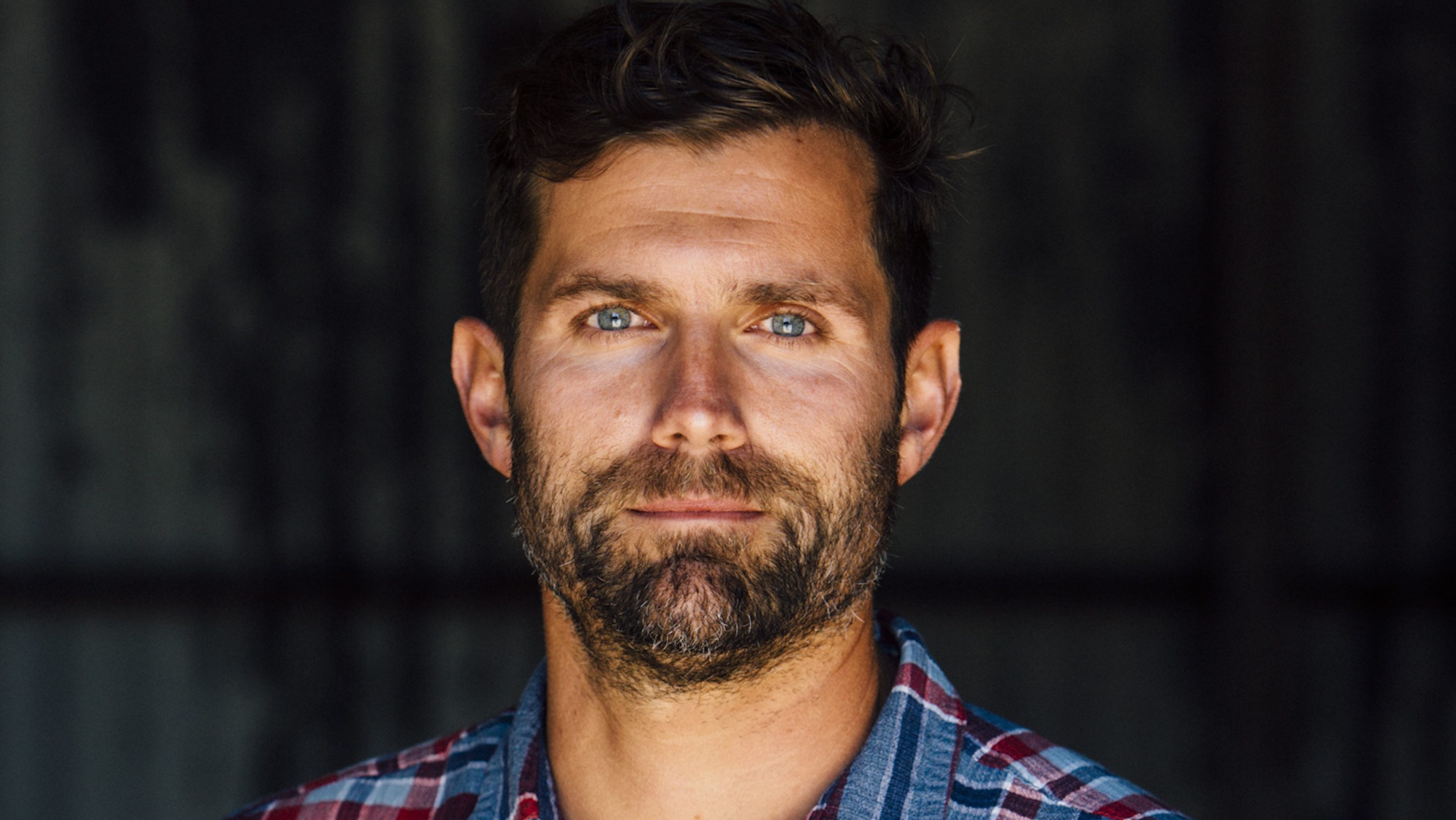
It was in the spring of 2021, in the stillness of the Covid pandemic, that Greg Curtis’s phone rang.
On the other end was Ryan Gellert and Hillary Dessouky, CEO and General Counsel, respectively, of the iconic American outdoor apparel company Patagonia.
Their message was simple: Founder and owner Yvon Chouinard wanted to sell the company. But not at any price – and not to just anyone.
They asked Greg Curtis to participate in the process. At the time, he was Deputy General Counsel and had years of experience with joint ventures and complex cross-border transactions. A sale was familiar territory.
Yet the sale of Patagonia would turn out to be far more complex than he had anticipated. Because it was not just a question of how to sell – but what would happen to the company afterwards.
A traditional sale could have generated billions. But it would also have brought pressure for growth, returns, and control. Once sold, Patagonia might not be able to buy its mission back.
At the heart of the matter was a fundamental question: How do you protect the values Patagonia was built on?
Part of the answer would be found in one of the most unlikely places: a company that has been brewing beer in the cold North for nearly 200 years.
A Process Without Spectators
There is not much good to say about Covid. But for the members of Patagonia’s leadership team working on the transaction, the pandemic came with an unexpected benefit.
Everyone was working from home. No physical meetings. No one could see who was going in and out of boardrooms. While Patagonia typically prioritizes transparency, for a process involving extremely sensitive deliberations, that was a gift.
“There was an unusual silence around the whole thing,” Curtis recalls.
“And that was actually crucial, because we quickly moved into territory where even articulating the ideas was in such deep uncharted territory, the last thing we wanted was to be overheard, taken out of context and to create confusion.”
At first, the conversations revolved around a single question: What is the ideal future of a company whose purpose is to save the planet?
The answer was not surprising. Yvon Chouinard wanted to unlock resources for nature protection at a scale that Patagonia could not deliver as a company in its form at the time.
But complexity quickly emerged.
The Unresolved Question
Yvon Chouinard may be Patagonia’s founder, but he was not its sole decision-maker. The company was owned by an entire family – and they had to come to a consensus.
While Yvon Chouinard wanted to release capital for nature, protecting Patagonia’s values and integrity became just as critical.
“It became very clear that whatever we did, the company had to remain itself,” says Greg Curtis.
“That was not negotiable.”
And the Chouinard family wanted a final answer to what comes next for Patagonia, a question for which an answer had long been sought.
As the process unfolded, a shared objective took shape: to find a solution that could simultaneously unlock philanthropic capital, protect the company’s mission and DNA, and ensure Patagonia’s long-term survival.
When a Sale Becomes the Wrong Answer
The decisive turning point came when the team managing the process began challenging the very premise of a sale.
“How much money is enough?” they asked Yvon Chouinard.
“Do you want the full billions that would be available if we sold the company?”
A full sale could have generated billions in a single moment. But the moment control changed hands, Patagonia would no longer define its own direction.
“In a traditional sale, our ability to protect the company from change would have become more limited. We could not guarantee that Patagonia would remain Patagonia,” Greg Curtis says.
With that realization, the path became clearer.
They needed a model that would allow the company, year after year, to generate substantial resources for nature – without putting its mission at risk.
“That’s when it became interesting,” says Greg Curtis.
“We started talking about creating an engine – not a one-time payout.”
Inspiration from the Danish Foundation Model
The team began looking for companies that had already found a structure capable of meeting the family’s criteria. Not theoretical ideas — but documented examples.
They found them primarily in Europe – and especially in Denmark, where foundation-owned companies have for more than a century combined business operations with long-term purpose.
“Carlsberg had visited us a few years earlier, and when they presented their ownership structure, we were honestly blown away,” Curtis recalls.
“We had no idea this existed.”
Philanthropic Ownership Works
What made an impression was not merely that Carlsberg was foundation-owned. It was that the structure had survived generations – without stifling innovation.
According to Curtis, the Danish model demonstrated two key points: that a foundation as majority shareholder can protect purpose over time, and that companies under foundation ownership can remain competitive, innovative, and financially sustainable.
That provided reassurance.
If Carlsberg could operate for 135 years under foundation ownership, why shouldn’t Patagonia be able to do something similar?
The hypothesis was reinforced by studies of other major Danish companies such as Novo Nordisk, Ramboll, Maersk, and Lego, as well as Bosch, Rolex, and other companies with alternative ownership structures.
“It showed that what has been happening in Denmark for more than 100 years proves that philanthropic ownership works – across generations and transitions of power and control. That’s powerful evidence of durability,” Curtis says.
He adds that foundation-owned companies may not always deliver spectacular growth rates.
“But they last for more than 100 years. And that was really what we were after. We weren’t looking for peaks and valleys. We were looking for consistency. And that was incredibly attractive.”
Adapting the Danish Model
The next phase was designing the precise structure for Patagonia. Everything was stress-tested, challenged, dismantled, and rebuilt.
“We couldn’t propose something we didn’t believe would hold,” Curtis says.
The Danish foundation model could not simply be copied. It had to be adapted to American legal conditions.
One crucial consideration was avoiding the U.S. requirement that private foundations must distribute at least five percent of their total assets annually – regardless of whether the company had a strong or weak financial year.
“There will always be periods when the company cannot issue a dividend,” Curtis explains.
“We wanted to avoid a situation where a legal requirement to distribute five percent every year could pressure us into making short-term decisions. That kind of pressure could push Patagonia in a direction Yvon never wanted.”
Separating Power and Money
The result is the model Patagonia is known for today – a structure in which power and money were deliberately separated.
Patagonia remains a traditional corporation. But 98 percent of the shares – and the associated economic rights – were transferred to the nonprofit organization Holdfast Collective, which operates independently of Patagonia.
This is where the dividends flow. Any profits not reinvested into the company are issued to the Holdfast Collective, which uses the funds for large-scale nature protection and climate initiatives.
The remaining shares – carrying the voting control – were placed in the Patagonia Purpose Trust, which controls the company and is tasked with safeguarding its purpose and long-term direction.
By separating financial benefit from decision-making power, Patagonia can generate substantial funds for nature year after year – without being sold or pressured into directions that conflict with its core values.
Three Years Later: Does It Work?
The model was announced in September 2022, when Patagonia gathered its employees at its headquarters in Ventura, Calif., for the first time since Covid.
Three and a half years later, Greg Curtis has closely monitored whether the structure has lived up to its intentions.
His conclusion is clear:
“It works the way we said it would,” he says.
“The company is performing. Dividends are being issued. The funds are being deployed for environmental protection. And the governance structure is functioning.”
There have been challenges — especially in communication. The ownership model is complex, and misunderstandings were common at first, both internally and externally.
“Patagonia is not a nonprofit. And it took time for people to understand that,” Curtis says.
He still encounters skepticism in the business world today – but also significant curiosity, particularly from aging founders facing succession questions and seeking ways to protect what they have built.
In his view, the fear is greater than the risk.
“There’s no reason for fear. The structure is durable, it works, and it can be used,” Curtis says.
“Many people will say it can’t be done — that investors won’t accept it, or that there’s only one way to build and structure a company. That’s simply not true.”
The inevitable question remains: Is Patagonia in a better place today than five years ago?
“100 percent,” Curtis answers without hesitation.
“Patagonia’s essence will endure. The mission is protected.”