Sound available Thursday 06.00 AM
What is the best image of hope for you?
For me, it is the birth of a new human being.
When a child enters the world, a new life begins. It is the beginning of a dream that lasts a lifetime. It is the hope of happiness. Of love. Of great achievements.
The very first cry of a newborn is, in itself, a dream come true. Two people who joined together, trusting in one another and in a shared future, began a process of creation and brought new life into the world.
This process has taken place throughout all of history. In spite of wars and catastrophes. In spite of hunger and disease.
Even in times of meaninglessness – when bringing new life into the world seemed almost irresponsible.
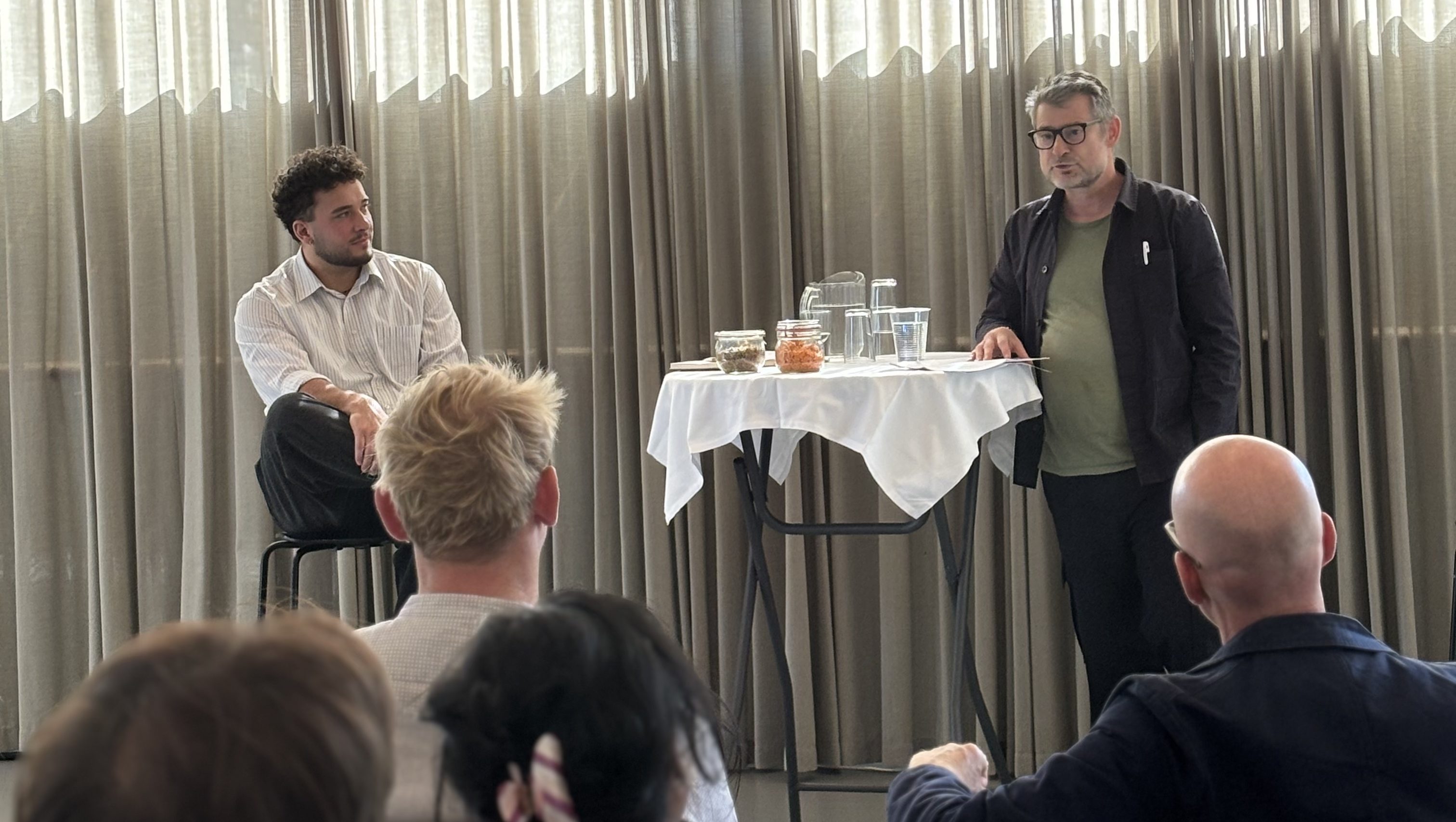
I have been asked to speak to you today about dreams. And dreams are some of the most powerful stuff we have.
They are fuel for change. The gateways to an infinite variety of new futures. Dreams are the natural psychedelics that set our imagination free and inspire us to change what already exists, and what feels meaningless.
Now, it has become so popular to say that hope is not a strategy. But without hope, without dreams, without the ability to imagine a better world, we have nothing.
My claim is that hope is not just the foundation for any meaningful strategy. Hope becomes a strategy the moment we connect it with action.
My name is Carsten Terp. And I am a social entrepreneur.
I’ve worn many hats over the years – mainly versions of the reporter’s hat: journalist, managing editor, editor-in-chief.
And four years ago, I founded my own media outlet, Impact Insider. It is a constructive media which I started because I had a hope. A dream of changing the world.
I also had an analysis. I knew I could not change the world by myself. It wouldn’t be me who stopped climate change. I wouldn’t find the cure for cancer. I wouldn’t solve homelessness.
But I could find my place in something bigger. I could join other dreamers. And give my contribution to help them succeed.
Dreams, hopes, and visions are the very fabric of our most important life choices. They determine how we spend our time on this planet. What we create, what we change, what mark we leave behind. Who we are!
Our imprint can be good or bad. It is usually both. And it can be more or less conscious.
I want to strengthen our awareness of the choices we make. I believe that we, as human beings, strive to do good. And that we can amplify the good we do when we combine our good intentions with an analysis of where our efforts are needed most and create the biggest value.
For example: There is absolutely nothing wrong with handing out food in a soup kitchen. But maybe this organization doesn’t need an extra set of hands, but a skilled accountant, someone who can use their expertise to strengthen the finances of the organization.
That is why I started a media which sheds light on the initiatives and efforts that actually work. Those that make a positive difference. Those that have an impact. So that we can become more aware of what does good, and what causes harm. And distinguish between important and insignificant. And make better choices. As individuals. As organizations. As a society.
I have met resistance and plenty of difficulties. Also many I did not foresee. But my dream of making the world better remains intact. That is why I stand here today. Together with you.
Today’s event is called Green Dreams. I am taking the liberty of merging the green agenda with the social one – and speaking about everything that makes our world better. Whether we label it green, social, cultural, or anything else.
My experience is that silo-thinking breeds silo-mentality. And what we need is the opposite. We need cross-cutting understanding. We need to realize that if we improve the climate at the expense of people’s well-being, we will create new problems – and an unhealthy competition for resources.
We must seek common ground and understand that everything we do has an impact. An influence. Negative or positive.
And that we can take responsibility for our impact through conscious actions. What we do matters.
So, our collective imagination has been broken. And that is my fault. Well, not mine alone. I won’t take all the responsibility. But I am a member of a profession that has made choices which have eroded the collective ability to imagine a better future. Out of concern for ourselves, our businesses, and our societal prestige. I am, of course, speaking about the media.
With great efficiency, we have painted ourselves into a corner, nourishing ourselves on our arrogant belief that we know best what people need to hear. And in doing so, we have reduced ourselves to messengers of death and destruction. We have become superspreaders of despair.
I launched Impact Insider as a response to this. It was at a conference in the Democracy Garage in Copenhagen on February 24, 2022. The very day Russia invaded Ukraine. Needless to say, it cast its shadow over the event.
I had prepared a celebration speech. A tribute to hope. And to the power of constructive journalism.
But then I woke up to the shocking news of the invasion. One of my first thoughts – self-centered as I am – was: Oh, I need to rewrite my speech.
How could I stand there and talk about hope on a day when people lost their lives in a war on European soil?
But as the day went on, I realized that was exactly what I needed to do. I should speak about hope. Not blind hope, but about hope combined with action – as an antidote to the evil and destruction that had just manifested itself in its most brutal form. And so I did.
Media focus on death and destruction creates collective despair, I said that day in the opening of my speech.
And many people become so overwhelmed by misery that they turn their backs on the news altogether, simply to protect themselves. Their mental well-being.
But life is not as hopeless as the media would have us believe. On the contrary. Because we have the ability to act on the problems we see.
And if media focus on death and destruction can create collective despair, then media focus on life and solutions can create collective hope. And a belief in a better world.
That became my starting point for Impact Insider. On one of the darkest days in modern European history.
So, what do we actually do at Impact Insider?
Our slogan is Good Money, Well Spent. And it expresses our rather unique approach to journalism about society.
Quite simply, we look at what comes out of the money we spend trying to make the world better. As dry and factual as possible in our starting point. And then we tell stories – as inspiring and engaging as possible – about what works, why it works, and how we can get more of it.
Put another way: we deal with impact – primarily positive impact – and the conditions for creating as much impact as possible with the resources we have. Good Money, Well Spent!
The background for this comes from my time at Altinget – a Danish media outlet covering politics – where I was hired to build the Civil Society section. That’s a portal dedicated to NGOs, foundations, social enterprises – all the things the media didn’t really bother to cover systematically.
I was there for six years. And during that time, I came across so much creativity, dedication, and willpower to make a difference for a cause or for a group of people nobody else paid attention to. It was wildly inspiring.
And at the same time, it was deeply disillusioning to see truly effective initiatives wither and die because they ran out of money.
They lacked a sustainable business model that would allow them to continuously create good results. As a result, so much good money was wasted – not to mention the time and energy of well-meaning people. And worst of all: the causes and people they tried to help suffered.
The same is true in the business world. We see CSR projects that never get to the root of the problem. Budgets are set aside for initiatives that look good in the shop window and in the annual report. But they make no real difference.
And in the public sector, we see program after program designed to help young people in distress or the long-term unemployed. But we measure how many people go through the program – not what they actually get out of it.
All of this is good money, poorly spent. And that is what we want to change. We connect good intentions with good results. And we tell those stories. We harness hope and connect it with action.
In practice, this means we care deeply about evaluations and evidence – so we can identify the initiatives that really make a difference. Whether they are created by a company, a municipality, or an NGO.
We also focus on the big picture – on systemic change. Which requires a different and much more patient perspective than just looking at single projects.
The complex, wicked problems – as they are sometimes called – demand that many actors come together and attack them from different angles.
Big hairy problems require big hairy solutions.
The prerequisite for that is understanding one another’s conditions, cultures, and room for maneuver.
That is why we also work to strengthen cooperation and understanding between the public sector, private sector, and civil society.
We are interested in how to find real solutions to problems, how to create change in collaboration with others, and what it takes in terms of legislation and funding to develop a more sustainable society.
Or put more simply: We take our starting point in hope and do our best to make it operational – so that we can inspire as many as possible to do as much good as possible, and to get the most out of it. Together and individually.
Impact Insider is my humble contribution to a better world.
It is my simple analysis of how, with my skills and experiences, I can give the greatest possible contribution to a world in need of improvement.
It is my way of connecting hope with action.
I could have stood here and told you about the resistance I’ve faced, about the times when my expectations did not match reality, and about all the mistakes I’ve made on my entrepreneurial journey.
I chose not to.
Not because you can’t learn from mistakes. On the contrary. The greatest lessons are often found in failure and adversity.
But that is not my message today. My message is this: the world needs hope.
We live in a world that literally bursts into flames before our eyes. And we need to act.
So, while hope alone is not a strategy, without hope we have no meaningful strategy. No meaningful way forward.
Therefore I urge you: cultivate hope. And combine it with analysis and action.
Never believe those who say that what you do doesn’t matter.
We can all make a difference. Even when we feel small and insignificant. That is why I urge you to follow your dreams.
It matters that we act. It matters how we act.
Thank you for listening.